_edited.jpg)
Alaska: Nome to Seward


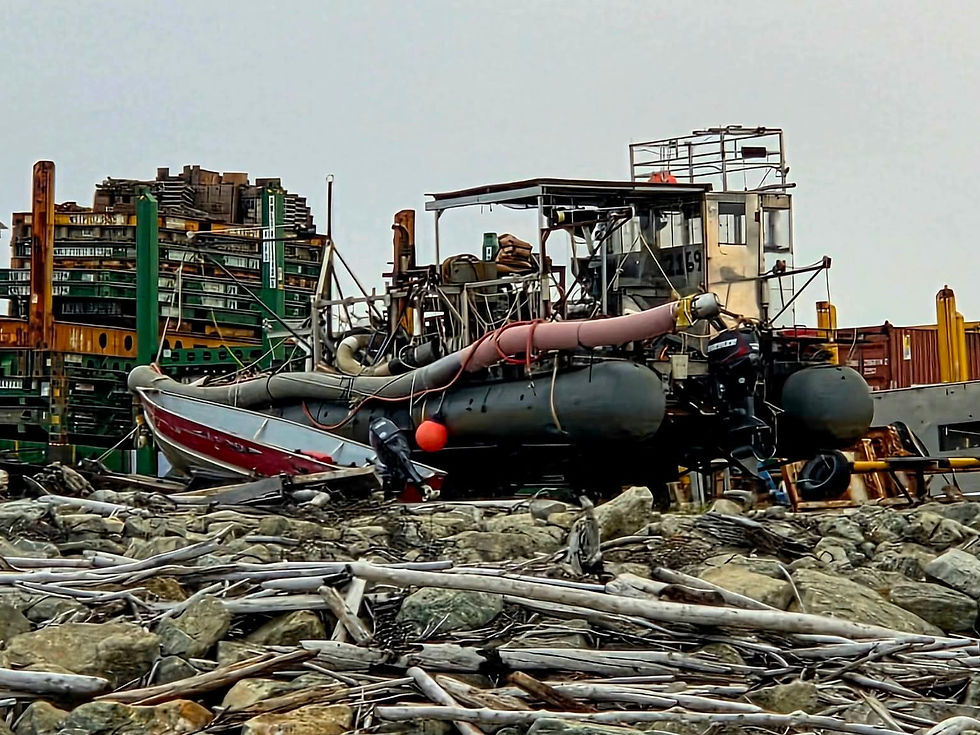
We're stuck in Nome for six days. The plan is to rest and work on the boat a bit. We're all on the same boat, riding out a storm in the south, and we're all keeping an eye on the weather forecast. Conditions are very changeable, and there are more low-pressure systems on the way. We meet some German gold prospectors who are successfully finding gold using special "gold suction boats." We learnt a lot about this gruelling job, where divers work on the seafloor for four hours using a suction nozzle. We could even find gold on the beach ourselves, after being shown how the soil's various layers work and how to pan for gold. Unfortunately, the weather is too bad, and we're very busy planning our next steps, so we end up leaving without any gold.


A small but mighty party on Aegir all the NWP sailors present in 2026 and Ella (SY Yeva), who unfortunately had to cut her Northeast Passage short, is a welcome change of pace for everyone. It’s a lot of fun, and there’s plenty of room for 12 people in the Aegir’s salon.

The diesel supply will be organised as a smaller project. The fuel truck must secure a suitable fuel nozzle for sailboats. Some credit cards are not accepted. A suitable spot for the fuel truck and the boats must be found. We took advantage of the first weather window with light winds to manoeuvre in the outer harbour. Heavy swell forced us to dock alongside the SY Coro Coro, which barely made it to the fuel pier. This is not suitable for small boats.

After that, we set course for St. Lawrence Island, where we planned to ride out the next storm. Despite the poor holding of the seabed, our anchor held up overnight against the first strong gusts. However, with a shift in the wind and the wind picking up again, our anchor gradually slipped. We weighed anchor and continued on our way, as the forecasts were reasonably good. Following the advice of a sailor named 'West of East', we take the route along the small volcanic Pribliof Islands (St Matthew, St Paul and St George). Our next stop is St Paul Island. This brings us quite close to our intermediate destination of the Aleutians. After more than two days, we reach St Paul in the early morning and enter the harbor.

We know from the SY Aglaia that there is enough room for us at the floating dock. Nevertheless, it’s nerve-wracking to sail into such a narrow and partly shallow harbour without being able to see where we’re going. The place has a simple, unassuming feel to it. There are few people around. The successful fishing season is over. People are preparing for winter. Boats are being taken out of the water and the docks will soon be dismantled – what luck that we can still dock here! The island's Russian past is palpable, as evidenced by the Russian Orthodox church. The island is home to a large fur seal colony during the summer months. On various beaches, we can observe huge adult seals alongside their pups. The pups are much faster in the water and are washed back ashore with the next wave. During our visit to the only tavern with Anne, Hughe, Kirsten and Tommy, we encounter very few other guests.

We begin our final leg across the Bering Sea after the storm. The first day is characterised by squalls and rough, uncomfortable swells. On the second day, we sail through the Unimak Pass and enter the Pacific Ocean. Other sailors take the False Pass, which lies further to the east. We had initially planned to take that route as well. However, the timing is even more challenging there due to the strong currents and offshore sandbars. It would also involve navigating extremely shallow waters along a buoy route. Our appetite for adventure is slowly running out this year, even though we know it would be a very impressive experience. So we chose the more leisurely route through the Unimak Pass!

On 21 September, we'll be celebrating the end of our fourth year of sailing in the middle of the Bering Sea. Wow, we totally didn't expect this! We made it into the Pacific via the NWP, and it's been an incredible journey! We leave the choppy waters of the Bering Sea behind and, thanks to a high-pressure system, the Pacific shows us its best side. The weather is absolutely glorious, and we can see the active Shimalgin volcano with a small plume of smoke rising from it.

Humpback whales leap out of the water, and we happily sail into the large fishing harbour at Sand Point. It's a safe place to ride out the next storm. The people are very friendly – a fisherman gave us a big octopus as a gift, but other than that, the town doesn't have much to offer. We were amazed at how "sparse" the supermarket's selection is compared to Greenland. To make up for it, we celebrated Tommy's 25th birthday on the Aglaia with a delicious South African curry.

Our next destination is Geographic Harbour, where we hope to see some 'big' bears putting on weight for the winter by feasting on salmon. We pass a few fishing buoys and are glad we didn’t run over the floating lines. After two gruelling days of sailing with strong currents and half-wind speeds of up to 42 knots in Shelikof Strait, we reach our destination and are overwhelmed by the breathtaking scenery. The bay of Geographic Harbour is framed by volcanic mountains. There are many otters out in the water and our wish comes true when we see two bears searching for clams on the beach at low tide. The calm, sunny weather with warm temperatures and the autumnal atmosphere of the forests is wonderful.


However, the next low-pressure systems are close behind. So we'll continue the following day. Our goal is to head straight to Seward. However, we have chosen a route via Kodiak and Whale Passage to avoid strong winds and 'wind-against-waves' conditions. Due to the strong currents in Whale Passage (up to seven knots) and the large quantities of giant and bull kelp, we stop to anchor and wait for the right time to cross while it’s still light.

Kelp is known for its ability to block propellers. That’s why daylight is important to us. Amid the dreamlike atmosphere of the morning, we are quickly carried through the passage by a current of up to 3.5 knots. There seem to be many shoals of fish in the water. The water laps against our boat and there are flocks of seagulls and lots of whales, so the passage truly lives up to its name. We’re lucky with the kelp. We only have to dodge a few small patches—better safe than sorry. With the help of the engine, we cross the Gulf of Alaska to Seward. We’ve already been assigned a berth.


The awe-inspiring sight of imposing mountains and glaciers comes into view off the coast of Seward, making for a truly unforgettable experience! The onset of winter is in the air, with some peaks already adorned in a pristine layer of snow. After a long time, we're back in a large harbour with an amazing number of sailboats. This marks the end of another fantastic sailing year. We're thrilled to have arrived earlier than planned and without any major damage. Over the next few weeks, we'll be busy preparing Aegir for winter. We’ve had a few days of beautiful, sunny weather and are making good progress on the exterior work. But we won’t be bored until the haul-out.

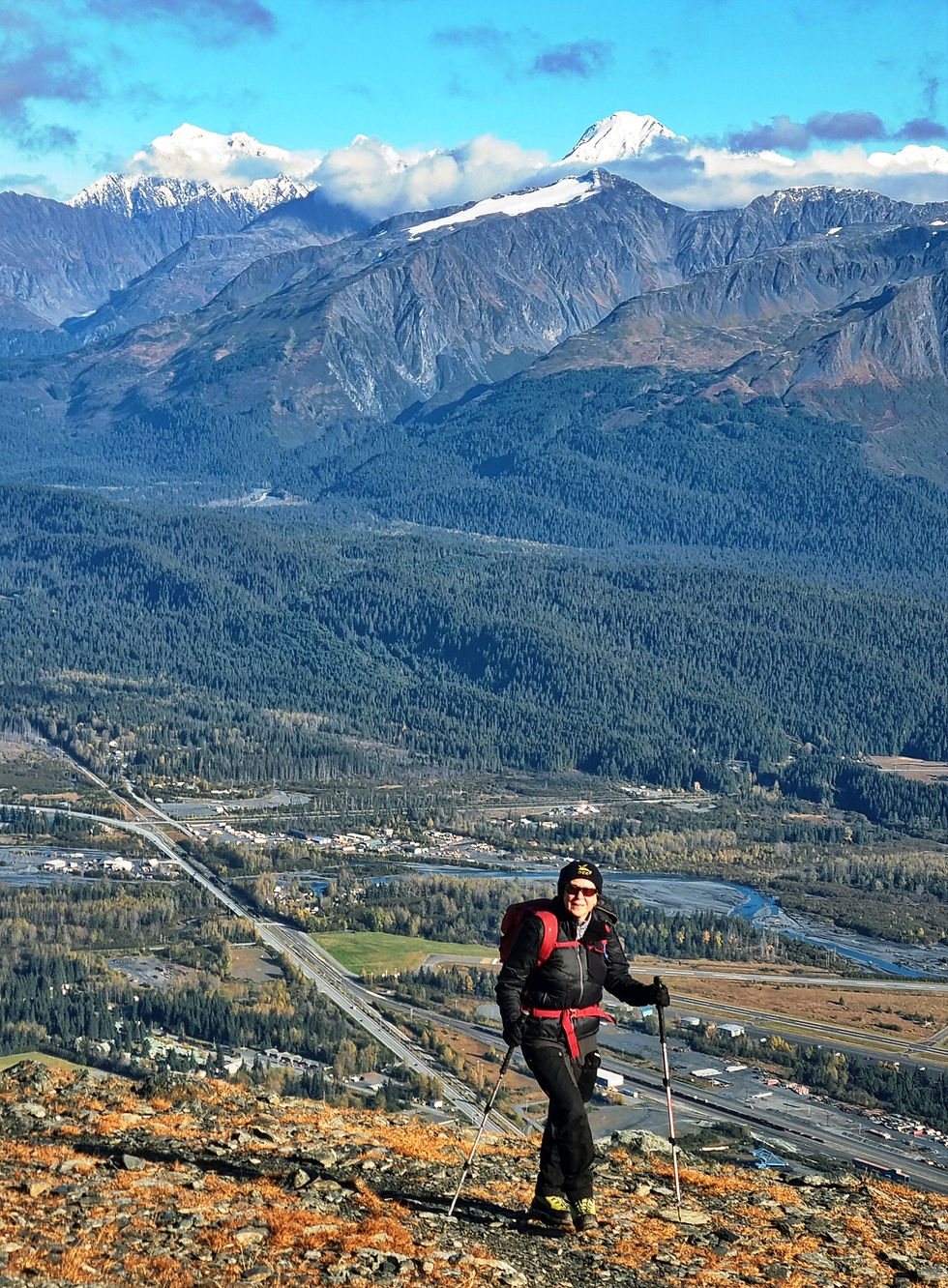
We're making the most of the sunny weather by hiking to Race Point from Mount Marathon and testing our sea legs on the steep 900-metre climb. Sore muscles are actually quite nice! In mid-November, we’ll leave Aegir on her own for three months while we fly to Europe to visit family and friends. Our plan for 2027 is to enjoy some relaxed coastal sailing with lots of guests on board. We can't wait!


Comments