_edited.jpg)
Sailing into Arctic spring

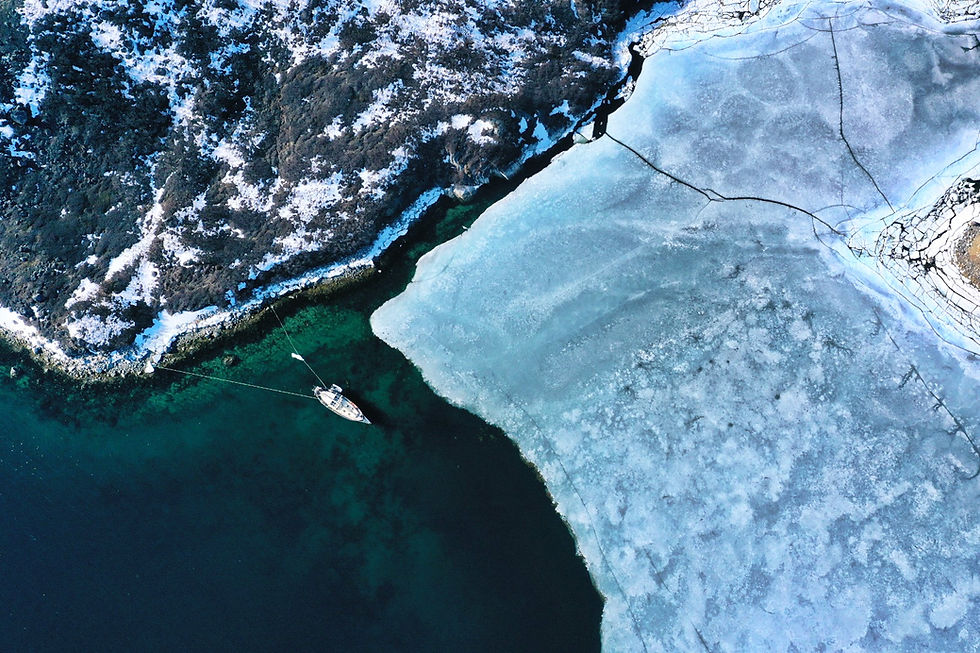
On March 19, we set sail for our fourth year, which promises to be an exciting one. Our journey began on 21 September 2022. The start after our winter break is a bit stressful as the engine's temperature alarm goes off shortly after we set off. We set sail with friends Stefan and Antje, making our way to the nearest marina. We only briefly start the engine each time. Stefan taps the thermostat with a hammer, giving it a few gentle taps. This works wonders. The cooling system is functioning properly again, which is good news. After a few days at anchor, we sail along the coast of Nova Scotia in daily stages. After spending time with friends in Halifax, we are now focusing on our own relationship.

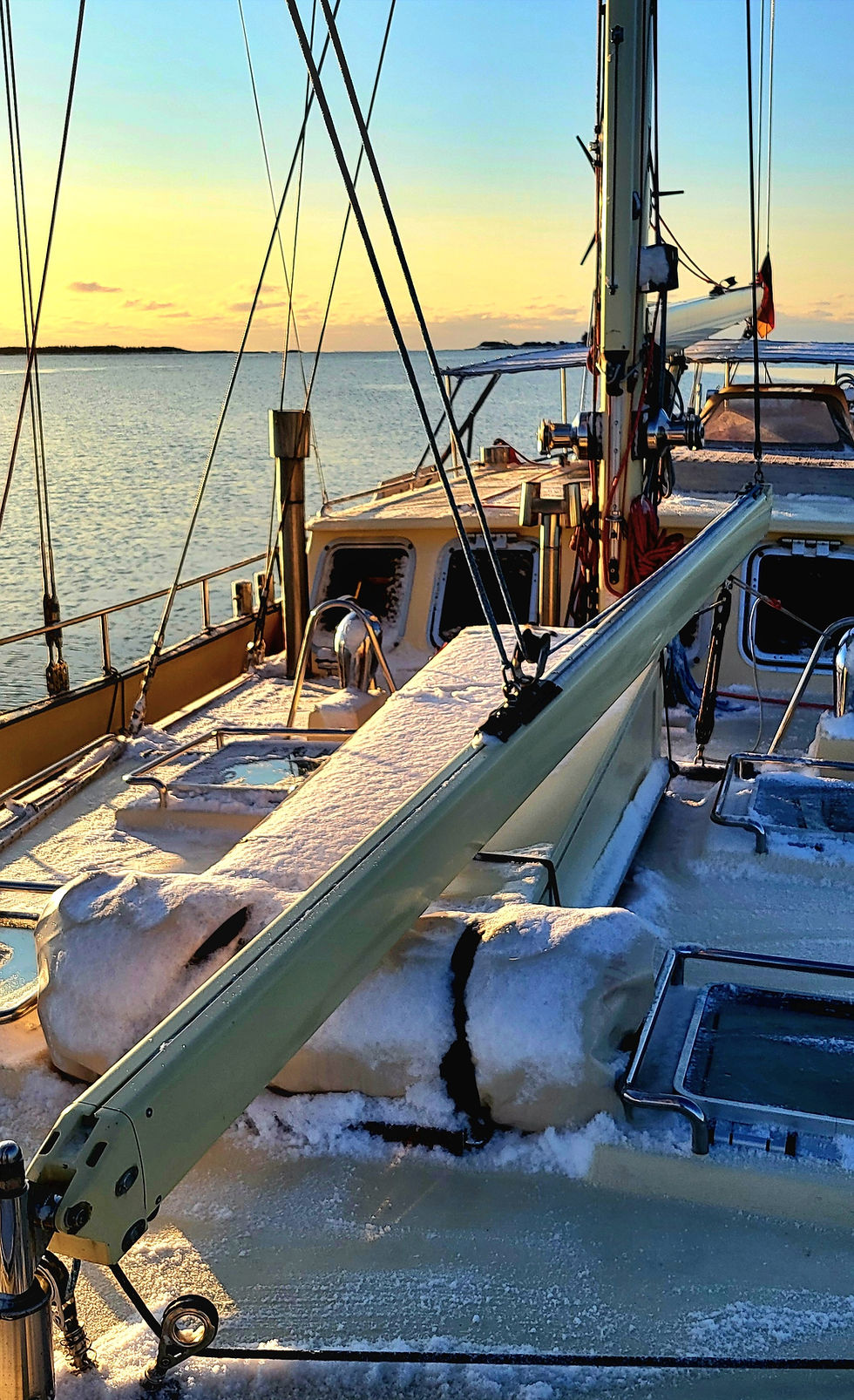
Snowfall and minor storms are dictating our progress, which is proving to be a challenge. It's a good start for the boat's routines to be reacquainted with while underway and for energy management to be practised while at anchor. The sailing conditions are rough for a start. But we see it as good practice for our sailing year. We are less than 100 NM from Halifax. We wake up anchored in Liscomb in the morning. We are still frozen in place by a thin layer of ice. It scrapes heavily against the hull. Aegir is slowly maneuvering into position against the wind.
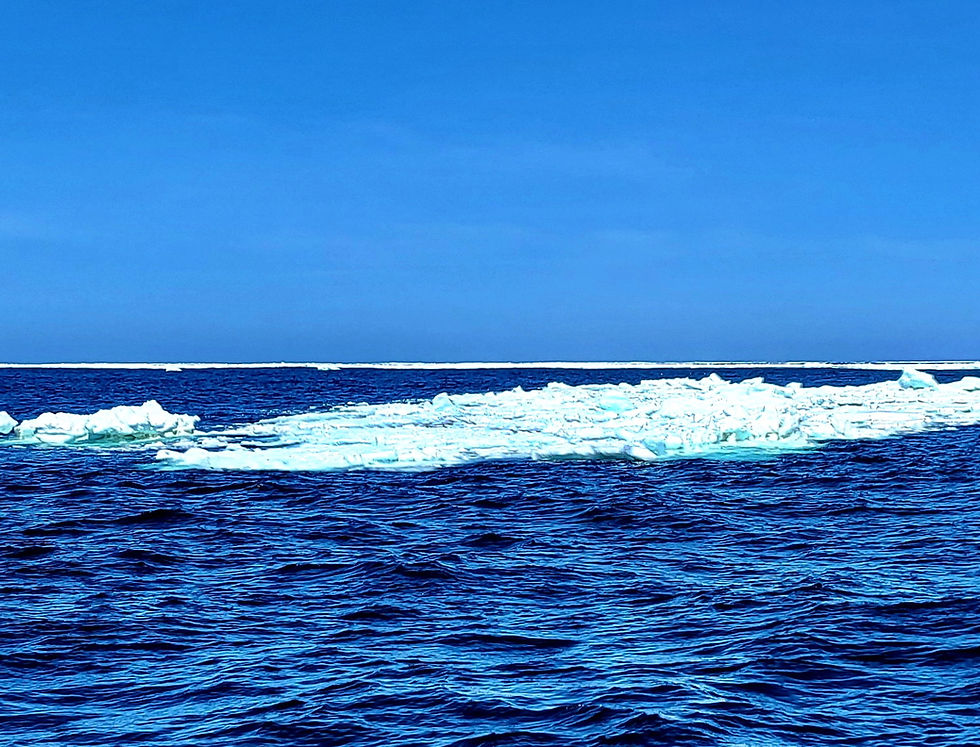
After seven days had passed, we arrived at Louisbourg, where we encountered an unexpected event: a long stretch of sea ice was seen about 10 nautical miles off the coast. It almost looks like a reflection on the horizon. Through the binoculars, it's clear: ice floes. A safe distance can be sailed along at and only a few larger growlers need to be watched out for. It's becoming increasingly clear that ice will remain our constant companion this year.
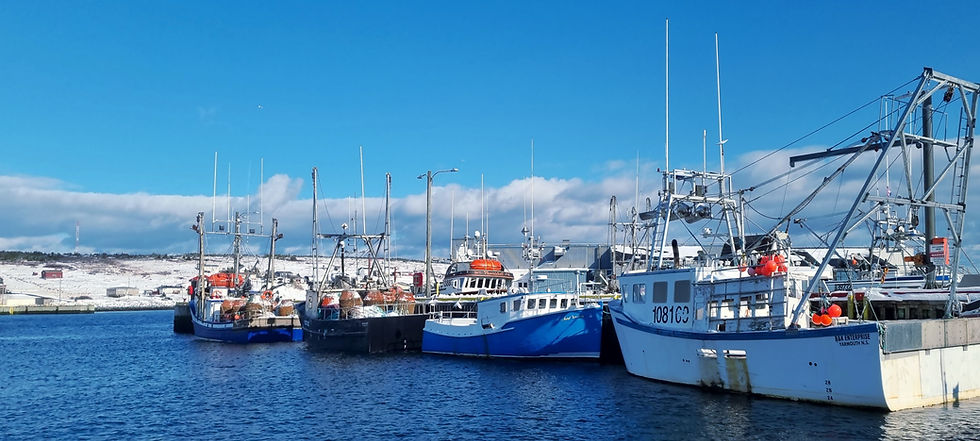
So, in Louisbourg, we meet these two friendly sailors: Katy and Jules are sailing their French yacht, Le Scélérat. The island of St. Pierre, a French overseas territory, is where they're headed. Jules has secured a position there as a fisherman, working for the summer season. A break is given to us by the weather and another new ice zone, so the fort is explored by us—which is free of tourists at this time of year. We buy a hefty halibut from local fishermen. We also get the latest ice reports. We set off from Louisbourg together with Le Scélérat and are fortunate that there is no ice on our route.
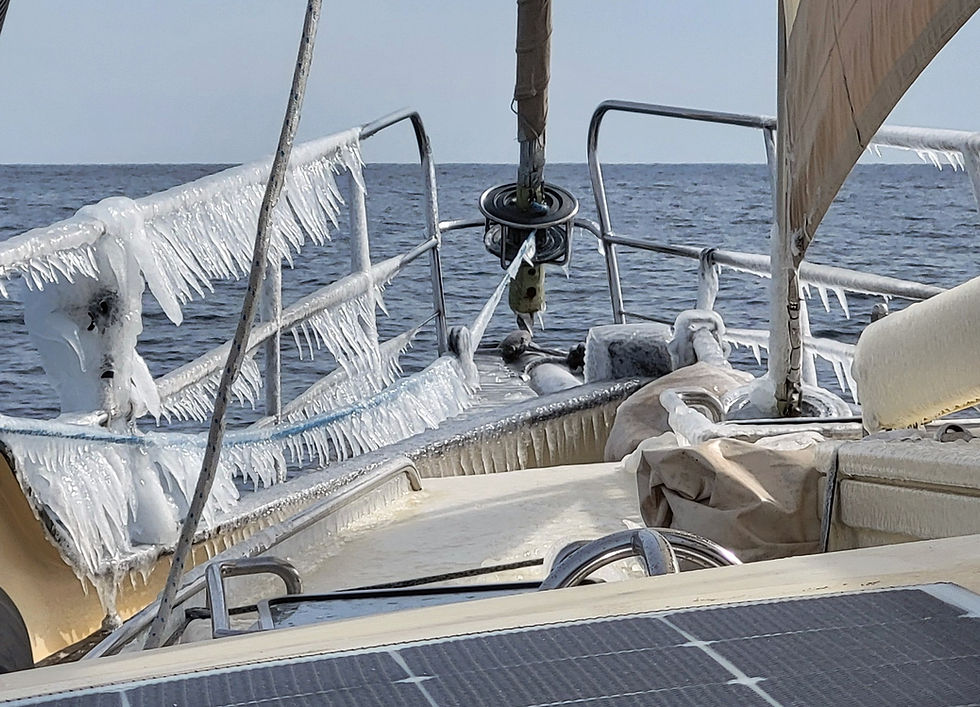
A bit less luck has been had with our diesel heater. After our service, the settings aren't right and it's more prone to malfunctioning than in the past. Consequently, we have been dealing with issues such as diesel spills and overheating. In the process, we damaged the fan. So we've decided to do without the heater, and the passage to Newfoundland is a bit colder than usual for us. As required, the central heating now provides a comforting warmth while we are sailing. After 34 hours, we reach St. Lawrence safely and without freezing. People have been tracking our route on Marinetraffic, which is a useful resource for anyone interested in maritime data. The wonderful Newfoundland hospitality and helpfulness await us. Fishermen make room for us at the pier and we're given fish and moose meat as gifts. The fan was repaired, and the stove was made operational again. What an Easter!

We are keeping a close eye on the ice conditions along the Canadian and Greenlandic coasts. Compared to previous years, significantly more ice has been seen to be moving at this time of year. The route we had intended to take to Greenland is no longer set in stone. Patience will be maintained!
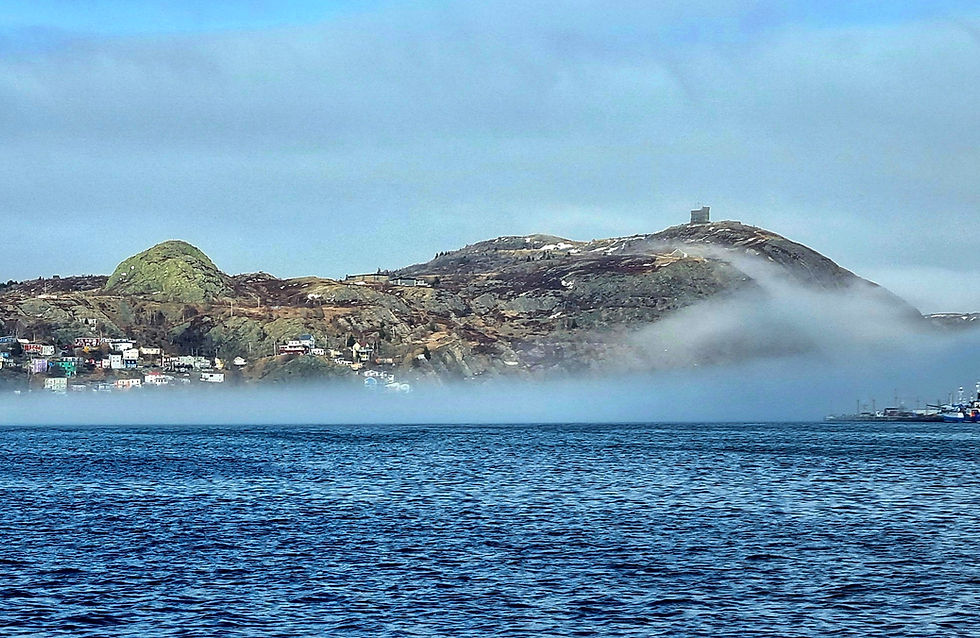
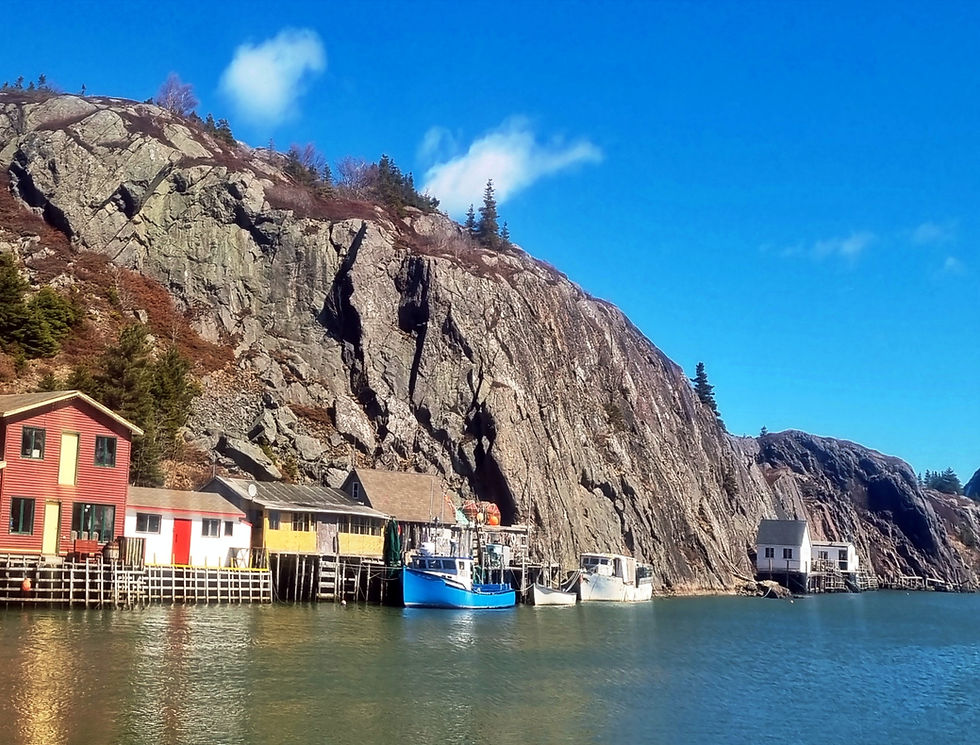
We continue in rough conditions. The waves are 3–4 metres high. They are coming diagonally from behind. There are tailwinds of up to 42 knots. We consider this to be an excellent opportunity to assess the seaworthiness of both our vessel and Aegir. After 15 hours, our destination is reached in the dark and anchor is dropped in a quiet bay near Trepassey in the far south of Newfoundland. So, we're all feeling pretty good, and we're back to "champagne sailing". After 2.5 weeks, the next important stopover is reached: St. John's. The final preparations for our crossing to Greenland are underway here (clearing the deck, repairing the wind generator, shopping, and refuelling). We also meet up with friends and attend concerts.
The 18th of April is the day: we're setting sail for the crossing to Greenland. Our initial plan calls for about eight days of sailing. It is clearly shown by the ice charts that a direct route does not exist. A detour of 180 NM to the southeast is being taken. The medium-range weather forecast shows no storms in our area. For the most part, we have excellent broad reach winds. Unfortunately, it is a bit rocky as fast 2.5-metre waves come in diagonally from behind. In the ice zone, whales and dolphins are encountered. On the third day of sailing, the weather update shows an approaching storm for West Greenland, which is expected to make landfall there. This forces us to change our plans: We decide to shorten the route and head for a more southerly anchorage near Arsuk. We accept that this means we will encounter a denser iceberg zone, but this gives us an extra day to take shelter from the storm.
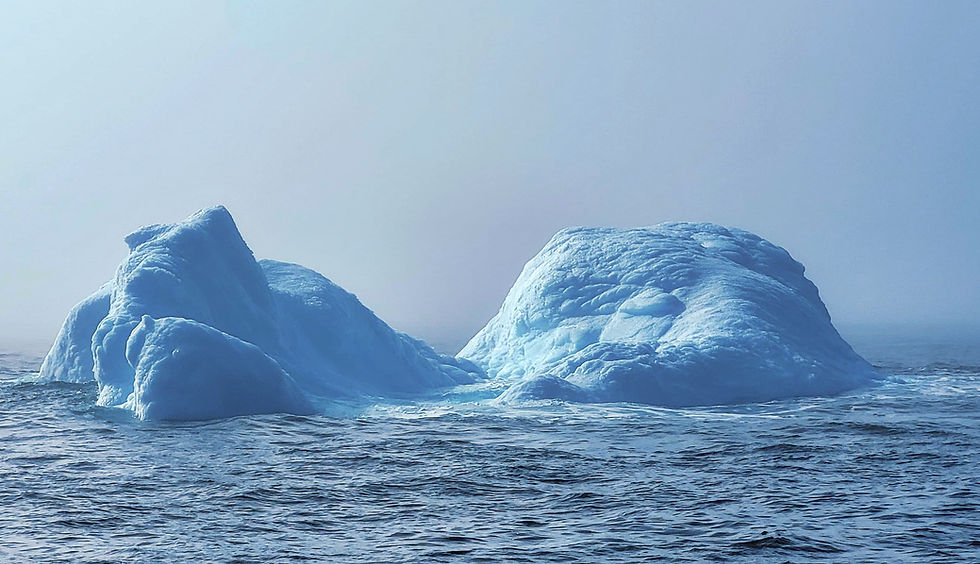
Even though the wind is good, we decide to keep the engine on and go faster. 100 nautical miles off Greenland, we spot the first icebergs on the radar while it's still dark. We are somewhat concerned about a field of sea ice that, according to two-day-old ice data, is supposed to lie directly in front of our destination. Fortunately, the ice field has gone. The fog gives way to the sun as we follow the last few miles of the ferry route and arrive safely at our anchorage.
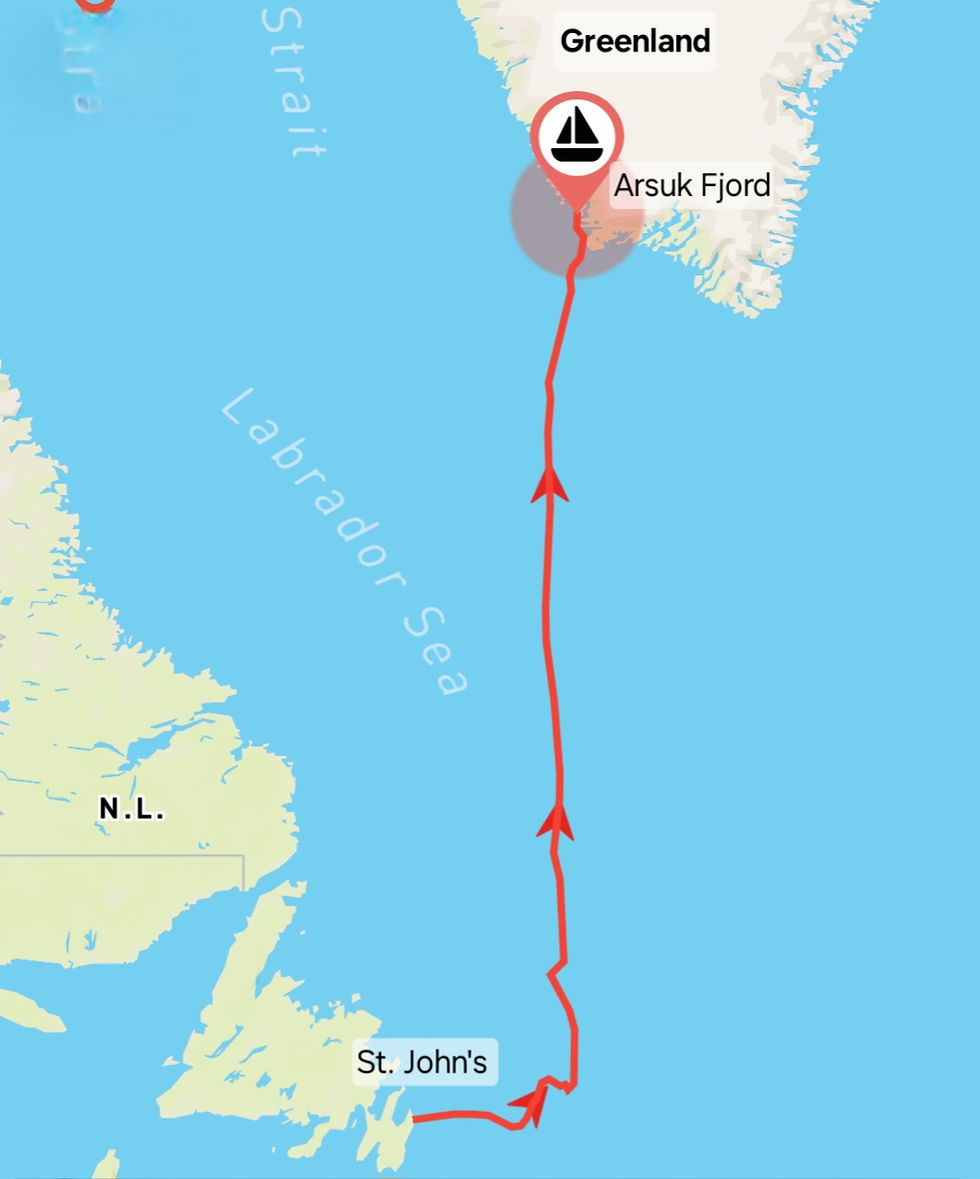
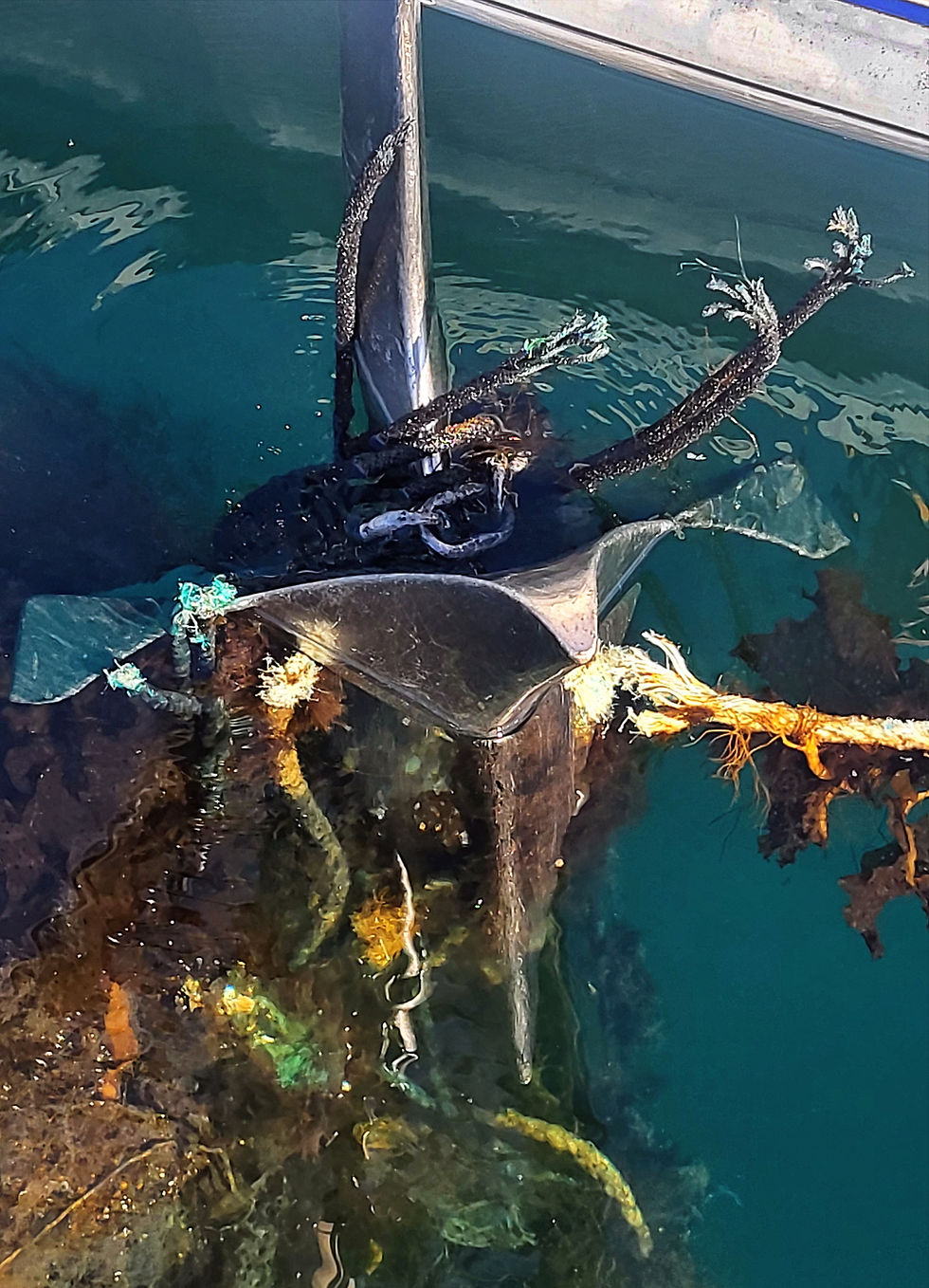
After 1,008 nautical miles and a good six days, we arrive in Arsuk, Greenland. We are relieved. Anchor is dropped in Fortuna Havn. We are unable to pull up the anchor the next day, unfortunately. A chain is entangled to the anchor. So are two steel cables. And weights. We manage to bring the anchor to the surface using the full power of our hydraulic anchor winch, and Gregor is able to cut through the chain and cables with the angle grinder. Our anchor is free!
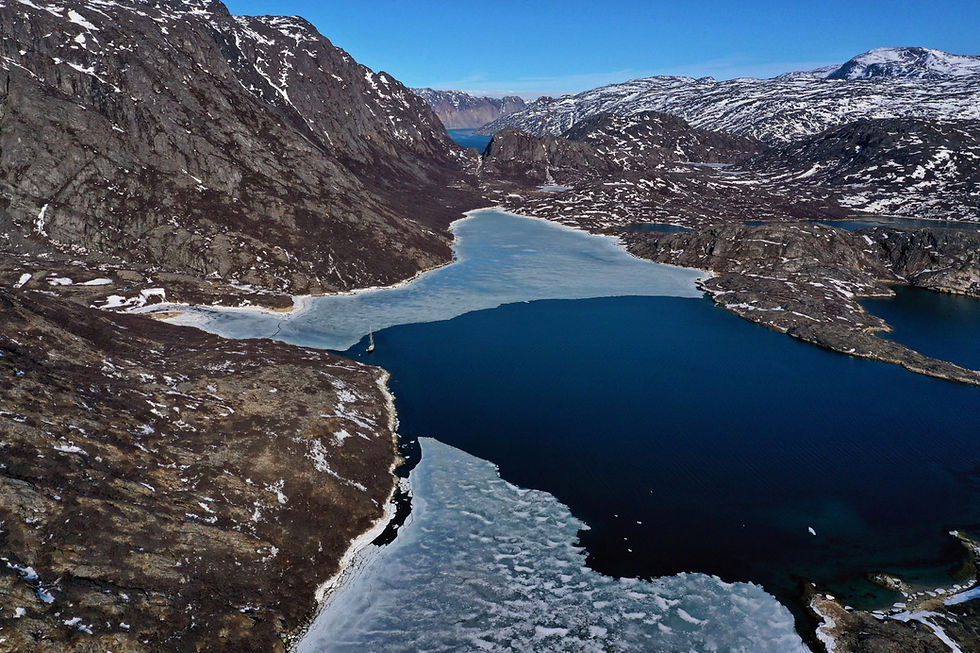
The end of the fjord is reached by us, unhindered sailing, and a safe spot to shelter from the storm is found. The fjord is framed by mountains that are still lightly dusted with snow. The sun makes the mountains and water sparkle. We feel really comfortable in this place. We drop anchor, secured with two mooring lines, and spend the next few days here looking forward to the wonderful nature and people of Greenland.


Comments